
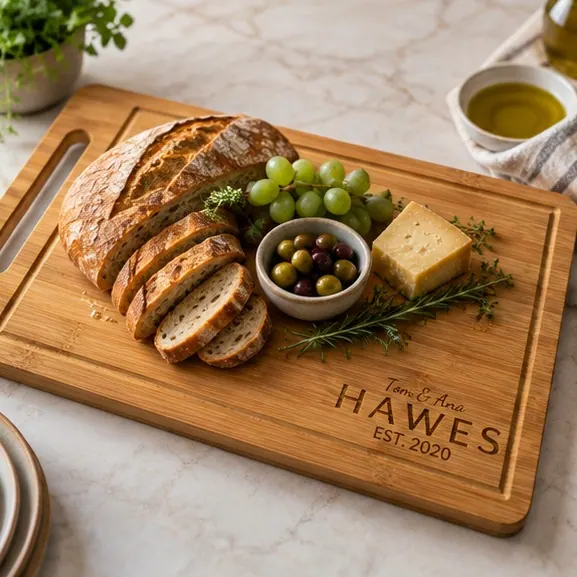
Classic Last Name
First names, last name and an optional EST year in the most versatile layout on the site.
$32.99–$39.99
Home › Guides › Personalized Housewarming Gifts That Feel Thoughtful
8 min readA correct gift and a thoughtful one differ by specificity, not price. The three levels, what to write on the card, and how to find out their move-in year.
There is a category of gift that is entirely correct and completely forgettable. It suits the occasion, it is in the right price range, nobody could criticize it, and it is in a cupboard within a month.
The difference between that and a gift someone still mentions years later is almost never money. It is specificity.
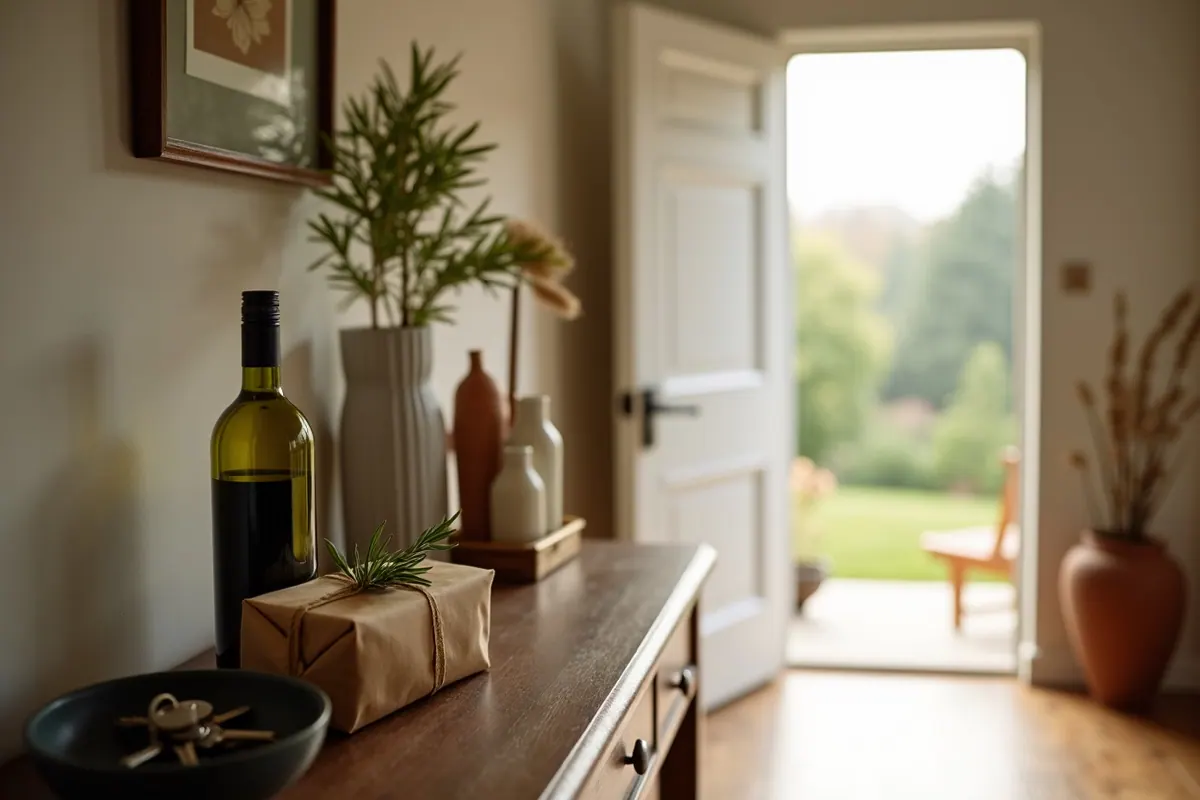
Ask one question about anything you are considering:
> Could this exact gift have gone to any other household this year without changing a single thing?
If yes, it is a correct gift. A nice bottle, a good candle, a set of tea towels: these are all fine, and all interchangeable. They say I marked the occasion.
If no, if the gift could only have gone to these people in this house this year, it says something else entirely. It says I was paying attention.
Personalization is the cheapest way to move a gift from the first category to the second, which is why it works so disproportionately well relative to its cost.
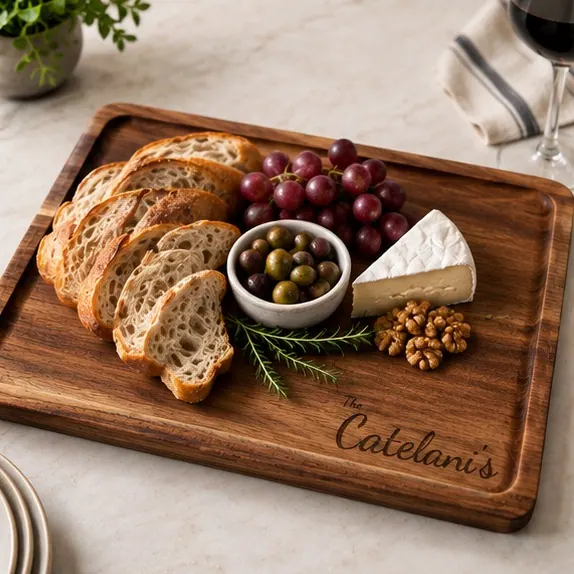
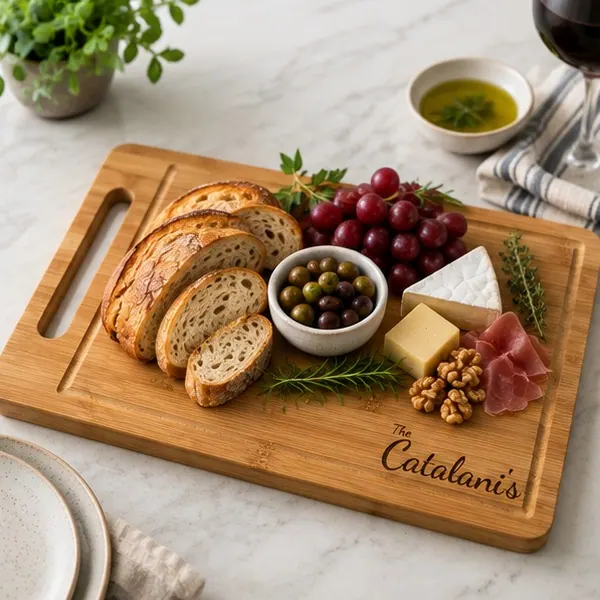
A $35 board with their surname and the year they got the keys will very likely be kept longer than a $120 generic serving set. Not because it is better made, because it is not, but because it cannot be mentally filed under "things we own". It is filed under "the thing the Hendersons gave us when we moved in". That is an argument about how objects get categorized rather than a measured result, and it is the one place in this piece where you should treat the comparison as reasoning rather than evidence.
This is worth stating plainly because the instinct when you want a gift to feel significant is to spend more. Spending more on a generic object mostly produces a more expensive generic object.
| Level | What it is | Example | What to write on the card | Typical cost |
|---|---|---|---|---|
| One: the occasion | Something appropriate to a housewarming. Good manners, nothing more. | A bottle of wine, a plant, a candle | "Congratulations on the new house!" | $15 to $40 |
| Two: the people | Chosen because of who they are. They cook, so something for the kitchen. | A good pan, a serving board, proper glassware | "Thought this would get used in that kitchen." | $30 to $90 |
| Three: the moment | Records that this household started here, in this year. | An engraved board: THE WHITFIELDS / EST 2026, or The Hendersons in script | "We remember you describing this kitchen after the second viewing. Glad it is finally yours." | $32.99 to $39.99 here, plus $6.00 boxed |
Level three is the only one of the three that costs less than level two. That is the whole point: you do not need to spend more to move up, you need to know slightly more and think slightly longer.
Engravings that land at level three, in order of how often they are the right answer: the plural surname with EST and the year of the move; the surname alone in block capitals; the script form for a family with children; the street name and the year for friends sharing a house.
This is the part people skip, and it is free.
A card that says "Congratulations on the new house!" is level one, regardless of what it is attached to.
A card that says "We still remember you describing this kitchen after the second viewing, glad it is finally yours" is level three, and it costs nothing. It proves you were listening.
If you can only do one thing well, do this one. A modest gift with a specific card beats an expensive gift with a generic one.
If the gift is shipping without you, the card still gets written. Gift boxing here is $6.00, and it includes a kraft box and a printed card carrying your message, up to 200 characters. That is two or three sentences, which is more than enough for the specific one and not enough for the generic three. A short care note goes in with it, and no prices or packing slip appear anywhere in the parcel. Write the message in the box at checkout rather than leaving it blank, because a boxed gift with an empty card is a level three object arriving with a level one message.
Adding a year to a personalized object changes its category.
A board with a surname on it is a nice possession. A board with a surname and EST 2026 is a record of something. It answers a question, which is when this family started here, and objects that answer questions get kept.
It also ages in the right direction. In twenty years, the name is just their name. The year is the interesting part.
The year is doing the work, so it is worth thirty seconds to get right. In rough order of reliability:
Ask them. "When did you actually get the keys?" is a normal question and nobody reads it as a hint.
Ask whoever told you they had moved. A sibling, a mutual friend, the group chat that carried the news.
Check the public record. In most US counties the sale is recorded and the deed date is searchable on the county recorder or assessor site, usually free. That gives you the closing year, which is what you want.
Look at what they posted. A moving-day photograph is dated by the platform, and that is near enough for a year.
If it is genuinely unknown and you cannot ask, engrave the surname alone. A name with no year is complete. A name with the wrong year is a permanent small error that they will notice every time they use it.
For the reasoning on which name and which year to use when a household is not a simple case, what to engrave covers the awkward situations directly.
A gift handed over on moving day, in a hallway full of boxes, gets put down somewhere and found later. A gift given two or three weeks in, when the house is starting to work, arrives into a moment where the household is actually noticing their home.
There is nothing wrong with moving day. But if you want the gift to land rather than be received, wait a little and bring it in person.
Specificity. A thoughtful gift could not have gone to any other household without changing something: it names them, marks their year, or responds to something particular about them or the house. A nice gift is appropriate to the occasion; a thoughtful one is appropriate to the people.
No, and spending more is usually the wrong lever. Personalization is what stops an object being interchangeable with anything else in the house, and it costs almost nothing: an engraved board here is $32.99 in bamboo or $39.99 in acacia, boxed for $6.00 more. Effort and attention do the work that money does not.
Something only you could write. Reference something specific: a detail about the search, something they said about the house, how long they waited. One specific sentence beats three general ones, and it is the cheapest upgrade available to any gift. If the gift is being shipped, the printed card in the $6.00 gift box holds 200 characters, which is enough for that one sentence.
Later, usually. On moving day the house is boxes and the gift gets set down and rediscovered. Two or three weeks in, the household is starting to notice their home rather than survive it, and something that marks the house as theirs lands properly.
Yes, if you can. A name alone makes an object theirs; a name and a year makes it a record of when they started here, which is what gets it kept rather than absorbed into general possessions. It also ages better, because in twenty years the year is the interesting part.
Ask them, or ask whoever told you they had moved. Failing that, the sale is a matter of public record in most US counties and the deed date is searchable free on the county recorder or assessor website, which gives you the closing year. A dated moving-day post is near enough too. If you cannot establish it, engrave the surname on its own: a name with no year is complete, and a name with the wrong year is a permanent error.
Then the surname alone, on something good and useful, is exactly right. Do not reach for specificity you do not have, because a guessed detail is worse than none. A well-made object with their name on it is a complete gift without embellishment.
If the household cooks or entertains at all, a kitchen piece is the safest route to level three. See why cutting boards work for housewarmings for that case in full, or the full list of personalized options by budget if you want alternatives.
All three engraving layouts take a surname and a year. The shop shows each in both woods, with a live preview of your text before you order.
First names, last name and an optional EST year in the most versatile layout on the site.
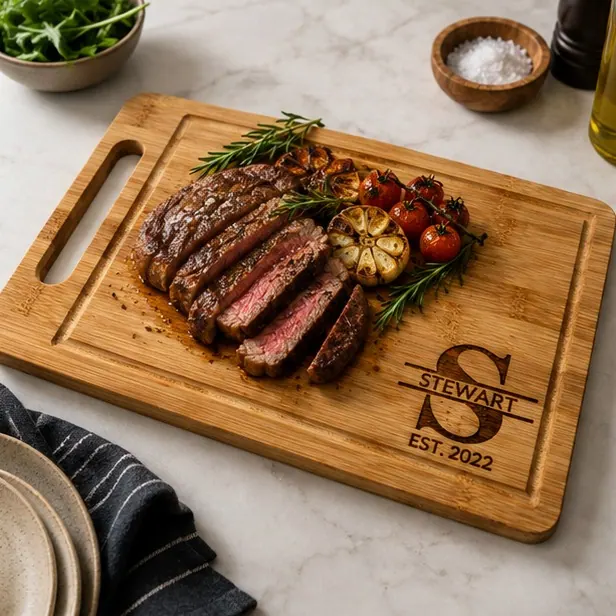
A timeless split layout with your initial, last name and optional EST year.
Soft script styling with an heirloom feel, especially strong for wedding gifting.
A butcher block is a thick end-grain or edge-grain surface that mostly stays put. A cutting board is a tool yo
Personalized means something gets made after you order, so it is not a same-day category. Here is the real tim
What to give parents who say they want nothing, how to split one gift between siblings, and what to engrave wh