
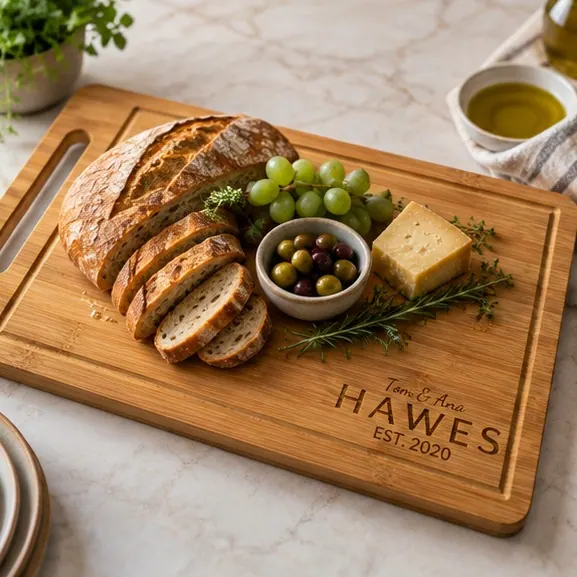
Classic Last Name
First names, last name and an optional EST year in the most versatile layout on the site.
$32.99–$39.99
Home › Guides › The Best Oil for a Cutting Board, and the Ones to Keep Off It
13 min readFood-grade mineral oil is the answer, and here is why kitchen oils are not. What beeswax adds, how much to use, and the water test that tells you when.
Food-grade mineral oil. It is the answer for almost every wooden board in almost every kitchen, and the reason is narrow and worth understanding: mineral oil is not a plant or nut oil, so there is nothing in it to go rancid.
That single property is most of the argument. Everything else on this page is either a version of that same point or a caveat about a bottle you already own.
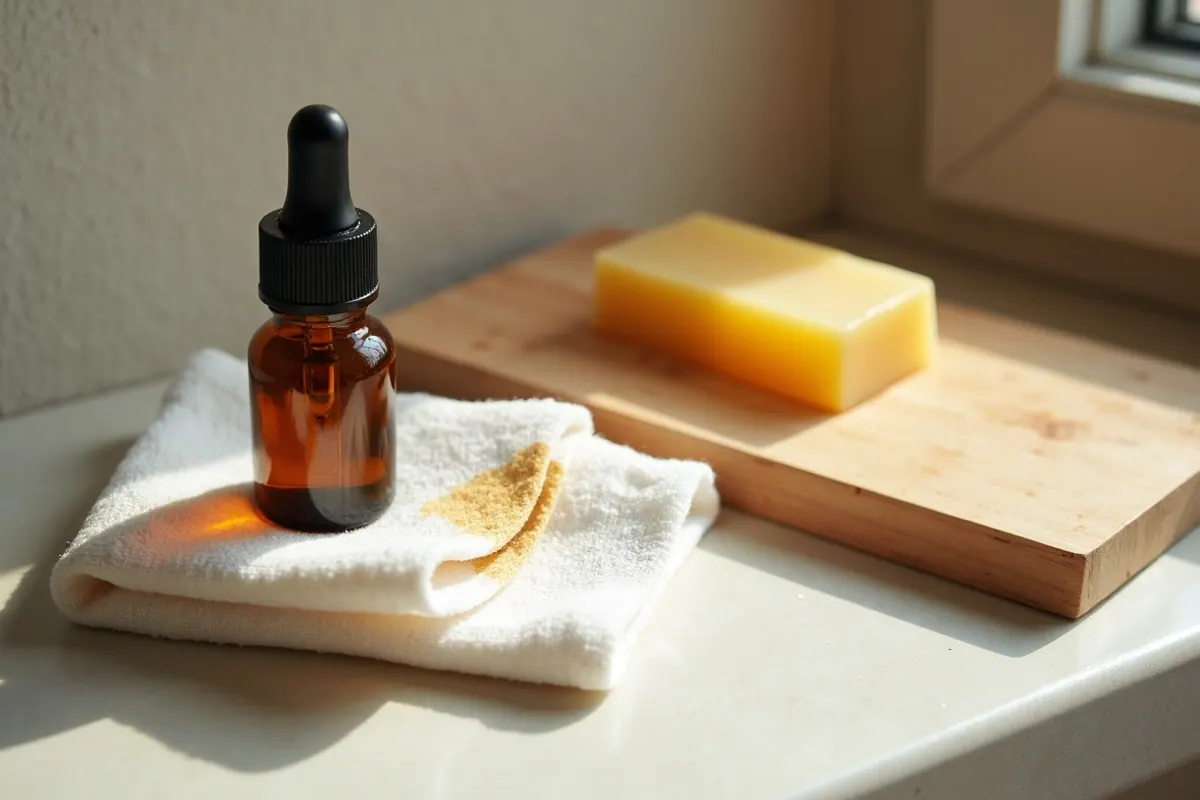
A cutting board is a porous surface that gets wet several times a week. Oil does not nourish it in any meaningful sense. It fills the spaces water would otherwise occupy, so the wood takes up less moisture, swells and shrinks less, and stays flatter and less prone to staining for longer.
To do that job well, an oil has to be three things.
Stable. It has to sit inside a piece of wood for weeks at a time at room temperature without changing. Cooking oils are made of fats that oxidize, which is what rancidity is. Food-grade mineral oil is not built from those fats at all, which is why it can sit in a drawer for years and still be fine.
Slow to leave. It stays liquid at kitchen temperatures and moves through the grain rather than setting hard on top. That is why a board takes a second coat well and why old oil can simply be topped up rather than stripped.
Suitable for a food-contact surface. Food-grade is a description of the grade sold for this use, and it is the grade to buy. It is worth being precise about what that word is and is not doing here: it describes the product you are buying, not a certification this shop holds or a safety approval of any kind.
Two practical advantages follow. It is inexpensive and sold in pharmacies and most supermarkets, so replacing it is never a project, and it is colorless and odorless, so it changes the wood only the way any oil does, by darkening it slightly and bringing the grain forward.
| Oil | What it is | Goes rancid | Verdict |
|---|---|---|---|
| Food-grade mineral oil | A refined mineral oil sold for food-contact use | No | Use this. The default for a reason, and the cheapest thing on the list |
| Board cream: food-grade mineral oil plus beeswax | The same oil with wax blended in | No | Good, as a top coat. Beads water better, needs redoing more often |
| Pure beeswax, on its own | A wax, not an oil | No | Not on its own. It sits on the surface and does not carry into the grain |
| Fractionated coconut oil | Coconut oil with the long-chain fats removed, stays liquid | Very slow to | Workable, and still pointless next to food-grade mineral oil |
| Refined coconut oil | Highly saturated, solid below about room temperature | Slow to | Not recommended, but not a disaster. Sets solid when cool |
| Virgin coconut oil | Unrefined, carries coconut aroma and more residue | Slower than seed oils | Avoid. The smell goes into the board and stays there |
| Olive oil | A culinary oil, mostly monounsaturated | Yes | Avoid. The classic mistake, and the one that smells worst later |
| Vegetable, canola, sunflower, grapeseed | Culinary seed oils | Yes | Avoid. Same failure, and none of them dry |
| Walnut, almond and other nut oils | Culinary nut oils | Yes | Avoid. Also worth avoiding around a household that keeps nuts out of the kitchen |
| Tung oil, raw linseed, "danish oil" | Finishing oils sold for furniture | No, they cure | Not for a prep surface. Hardware-store versions often contain driers and solvents |
Rancidity is the fats in a cooking oil reacting with oxygen and breaking down. In a pan it is a slow background process you interrupt by using the bottle. Inside a cutting board it is neither slow nor interrupted: the oil is spread thin across an enormous internal surface area, in contact with air, at room temperature, for months.
The result is a smell. It is usually described as old crayons, or paint, or wet cardboard, and it is stubborn because it is not on the board, it is in it. Washing does nothing. The fix is sanding the prep face back with 220-grit and starting over with food-grade mineral oil, which is a genuine afternoon of work to avoid by picking up a different bottle.
Two things this does not mean. It does not mean a board that has had olive oil on it once is ruined; a single light coat that is mostly wiped off often never develops a smell at all. And it does not mean the oil is doing anything to you, which is not a claim this page makes in either direction. The problem with kitchen oils on a board is that they smell, and that the smell is hard to remove.
Coconut oil is the one that gets handled unfairly. Most guides put it in the same sentence as olive oil, which is not accurate, and being inaccurate about it makes the rest of the advice easier to dismiss.
Coconut oil is very highly saturated, which is precisely the property that makes an oil resist oxidizing. Refined coconut oil in particular is far more stable than olive, canola, sunflower or any nut oil, and people who have used it on a board for years and never had a smell problem are not imagining it.
So the objection has to be an honest one, and there are two.
It sets solid. Coconut oil is solid below roughly room temperature and liquid above it. On a board kept in a cool kitchen it firms up in the grain and on the surface rather than staying mobile, which makes topping up less even and makes the finish feel different from one week to the next. Fractionated coconut oil stays liquid and gets around this, at which point you have bought a more expensive product to do the job food-grade mineral oil already does.
It solves nothing. There is no property of coconut oil that food-grade mineral oil lacks, and food-grade mineral oil is cheaper, more available, entirely stable and does not care what the kitchen temperature is.
The practical position: no reason to choose it, no emergency if someone already has. If a board has had refined coconut oil on it and smells fine, carry on and switch to food-grade mineral oil at the next coat.
A board cream, sometimes sold as board butter or board conditioner, is food-grade mineral oil with beeswax blended into it, and some add harder carnauba wax as well. Wax and oil do different jobs. Oil travels into the grain and stays there. Wax is solid at room temperature, so it mostly stays at the surface and fills the outermost pores, and what you get for that is water beading more visibly and a slightly softer sheen on the engraved face.
What it does not do is protect the board more deeply. The wax layer is thin and it comes off with washing faster than the oil underneath does, which is why a waxed board looks like it needs redoing sooner than an oiled one.
The arrangement that makes sense:
A board that only ever sees food-grade mineral oil is fine forever. A board that only ever sees wax is not.
About a tablespoon covers a board this size, whether that is the 12in x 7.8in bamboo or the 12in x 8in acacia. Pour it on, spread it with a cloth or a paper towel working with the grain, and cover the edges and the end grain as well as the two faces, because end grain drinks the most and is where a board dries out first.
Then leave it a few hours or overnight and wipe off whatever has not soaked in. That last step is the whole answer to the over-oiling question.
You cannot really over-oil a board. The wood takes up what it can hold and stops. Anything beyond that sits on the surface, and a surface that still feels slick or tacky the next day does not mean the wood is damaged, it means the excess was not wiped off. Wipe it and the problem is gone.
What you can do is oil too often and waste oil, or oil a board that is still damp, which traps moisture under the coat. Start with a clean, completely dry board, every time.
Boards ship unoiled, so the first coat is the recipient's job and is worth doing before the board is used at all. The full wash, dry and oil routine, including how to bring a gray and neglected board back, lives in how to care for a wooden cutting board, and there is no point repeating it here.
Every month or two in normal use is the usual answer, and it is a starting point rather than a rule. Boards in dry houses, boards near heating, and boards washed daily need it more often, and boards that sit on a shelf and come out for cheese at Christmas need it less.
Do not guess. Drop a little water on the surface. If it sits up in a bead, the board is fed and nothing is required. If it soaks straight in and darkens the wood under it, the board is thirsty. A dry board also reads pale, slightly gray, and feels a touch rough under a fingertip.
Run the test on the prep face rather than the engraved one, since the prep face gets the washing and dries out first. And run it on a new board before first use.
One thing the test does not measure is the engraving. Oil does not lift a burned mark, because there is nothing sitting on top of the wood to lift. If anything the engraving reads more clearly after oiling, since the surrounding wood darkens more than the burned area does. How laser engraving works on wood covers why.
Picking a bottle, without overthinking it.
You can, and it is the most common mistake people make with a wooden board. Olive oil is not a drying oil, so it sits in the grain rather than curing, and over months it oxidizes and develops a stale smell that soaks into the wood. Getting it out means sanding the surface back with 220-grit and re-oiling with food-grade mineral oil. One light coat that was mostly wiped off often causes no trouble at all, so this is a reason to switch bottles rather than to panic.
No. Rancidity is what happens when the fats in a plant, seed or nut oil react with oxygen and break down, and food-grade mineral oil is not built from those fats, so there is nothing in it to turn. That is the entire reason it became the standard board oil. A bottle stored in a kitchen cupboard stays usable for years.
Not in any way that harms the board. Wood absorbs what it can hold and stops, and everything past that point stays on the surface, so a board that feels slick the next day simply has excess sitting on it that needs wiping off. The one genuine mistake is oiling a board that is still damp, which seals moisture in. Always start with a board that is completely dry.
Board cream is food-grade mineral oil with beeswax blended into it, so it is the same oil plus a wax. The oil carries into the grain and does the real work; the wax stays near the surface, makes water bead more visibly and gives a slightly softer sheen. The wax also washes away faster than the oil does, so a cream needs reapplying more often. Oil alone is completely sufficient.
About a tablespoon for a board around 12 inches by 8 inches, spread with a cloth over both faces, the edges and the end grain. Leave it for a few hours or overnight so it can travel into the grain, then wipe off whatever has not been absorbed. A new board or a dried-out one will take several coats over a few days before it stops drinking.
It is better than olive or seed oils and still not the one to choose. Coconut oil is highly saturated, so refined coconut oil resists turning far better than the culinary oils people usually get warned about, and boards treated with it often never develop a smell. The problems are that it sets solid below room temperature and that it offers nothing food-grade mineral oil does not offer more cheaply and more simply.
Yes, and it improves how the engraving reads rather than harming it. The lettering is burned into the wood rather than printed onto it, so oil has nothing to lift or smear. Oil both faces, including the engraved one, and wipe off the excess as usual. What wears an engraving is a knife blade, not oil.
Once the excess has been wiped off and the surface no longer feels wet to the touch, which in practice means a few hours after a normal coat or the next morning after a heavy one. There is no curing period to wait out, because food-grade mineral oil does not harden. If the surface still feels slick, wipe it again rather than waiting longer.
All of this takes about four minutes a month and it is the difference between a board that lasts decades and one that goes gray in a season. It applies the same way to both of ours: the bamboo board with an integrated handle at $32.99, 12in x 7.8in x 0.5in with a groove channeled around the face, and the acacia at $39.99, 12in x 8in x 0.6in with a flat unbroken face.
Acacia drinks its first coat more visibly and darkens more than bamboo does, which bamboo vs acacia goes into properly. If you are still choosing, the shop previews all three layouts with your own names on them, and a $6.00 gift box with a printed card of up to 200 characters is the place to write down the two rules that keep a board alive: hand wash it, and oil it now and then.
First names, last name and an optional EST year in the most versatile layout on the site.
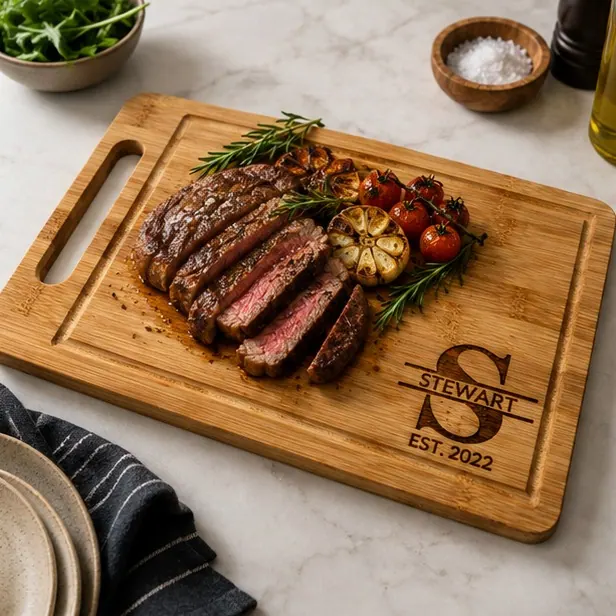
A timeless split layout with your initial, last name and optional EST year.
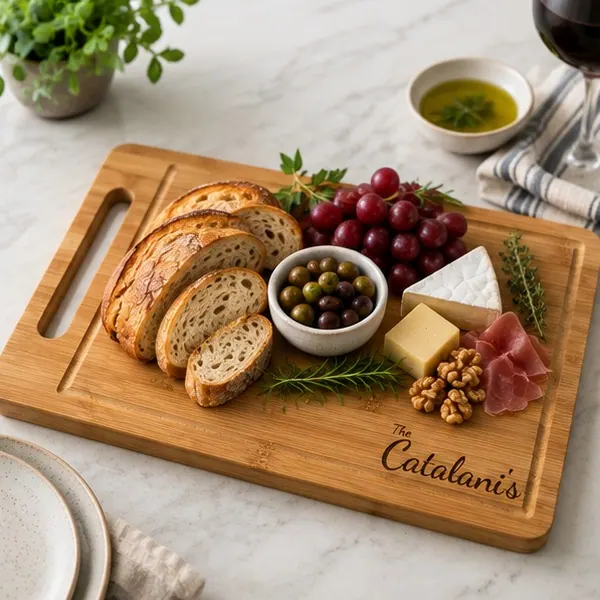
Soft script styling with an heirloom feel, especially strong for wedding gifting.
A butcher block is a thick end-grain or edge-grain surface that mostly stays put. A cutting board is a tool yo
Personalized means something gets made after you order, so it is not a same-day category. Here is the real tim
What to give parents who say they want nothing, how to split one gift between siblings, and what to engrave wh